This reading made me to think deeply about the role of critical thinking and media literacy in our world today where everyone can generate answers instantly, but cannot judge the truth, ethics, or long-term consequences.
In my reflections below, I engage with the questions by connecting the course concepts to real-world examples, my own media habits, and how I see my future role as an Entrepreneur and leader evolving in an AI-enabled world.
Question 1: AI tools can generate information quickly, but they cannot exercise judgment or responsibility. What risks arise when decision-makers rely on AI outputs without strong critical thinking skills? Describe a real-world example where this could cause harm.
One of the major risk of relying on AI outputs without strong critical thinking skills is to mistake confidence and fluency for accuracy because generative AI systems are designed to predict plausible responses, but they cannot verify truth or take responsibility for their responses or the consequences. When their outputs are treated as authoritative in high-stakes contexts like law, healthcare, or business, the errors can quickly turn into real harm.
One real-world example of this I remember is from the early days of ChatGPT, when a U.S. law firm used AI to draft a legal brief. The AI generated case citations that sounded legitimate but did not actually exist. These fabricated cases were then submitted to the court, which was flagged and lead to sanctions against the lawyers involved and nearly costing them their professional licenses.
“We made a good faith mistake in failing to believe that a piece of technology could be making up cases out of whole cloth.”
— Reuters, 2023
This example shows one of the core issues raised in the reading: AI cannot judge credibility, context, or ethics. So without human verification, AI hallucinations can quietly slip into decision-making processes and create legal, financial, or reputational damage. Strong critical thinking skills like fact-checking, questioning assumptions, and understanding tool limitations can try to prevents these failures, especially when decisions affect other people’s lives.

Question 2: What does it mean to be “invaluable” in an AI-enabled workplace? Based on this reading, which human skills do you think will matter most in your future career, and why?
I feel like to be invaluable in an AI-enabled workplace means contributing what AI fundamentally cannot do properly right now, which is judgment, responsibility, and agency. As the reading explains, while AI can automate routine tasks and generate content at scale, it cannot determine what matters, what is ethical, or what trade-offs are worth making.
In my future career as a tech founder and executive, I believe two skills will matter most: human connection and high agency. Human connection would allow me to build trust, motivate my team, and navigate interpersonal matters which AI cannot replicate. High agency, on the other hand according to “the ability to take ownership, initiate action, and shape outcomes rather than waiting for instructions or blaming circumstances.” – highagency.com

Question 3: Do you feel that you currently adequately scrutinize the sources of media that you consume? Do you plan to apply more scrutiny and fact-checking in the future, and if so, how?
Personally, I would say I’m partially effective at scrutinizing media, but not as consistently as I probably should. I do make conscious choices about which platforms and sources I consume, and I’m more skeptical of information that immediately triggers my “BS detector.” That said, once I mentally categorize a source as “trusted,” I tend to lower my guard and apply less scrutiny to individual claims.
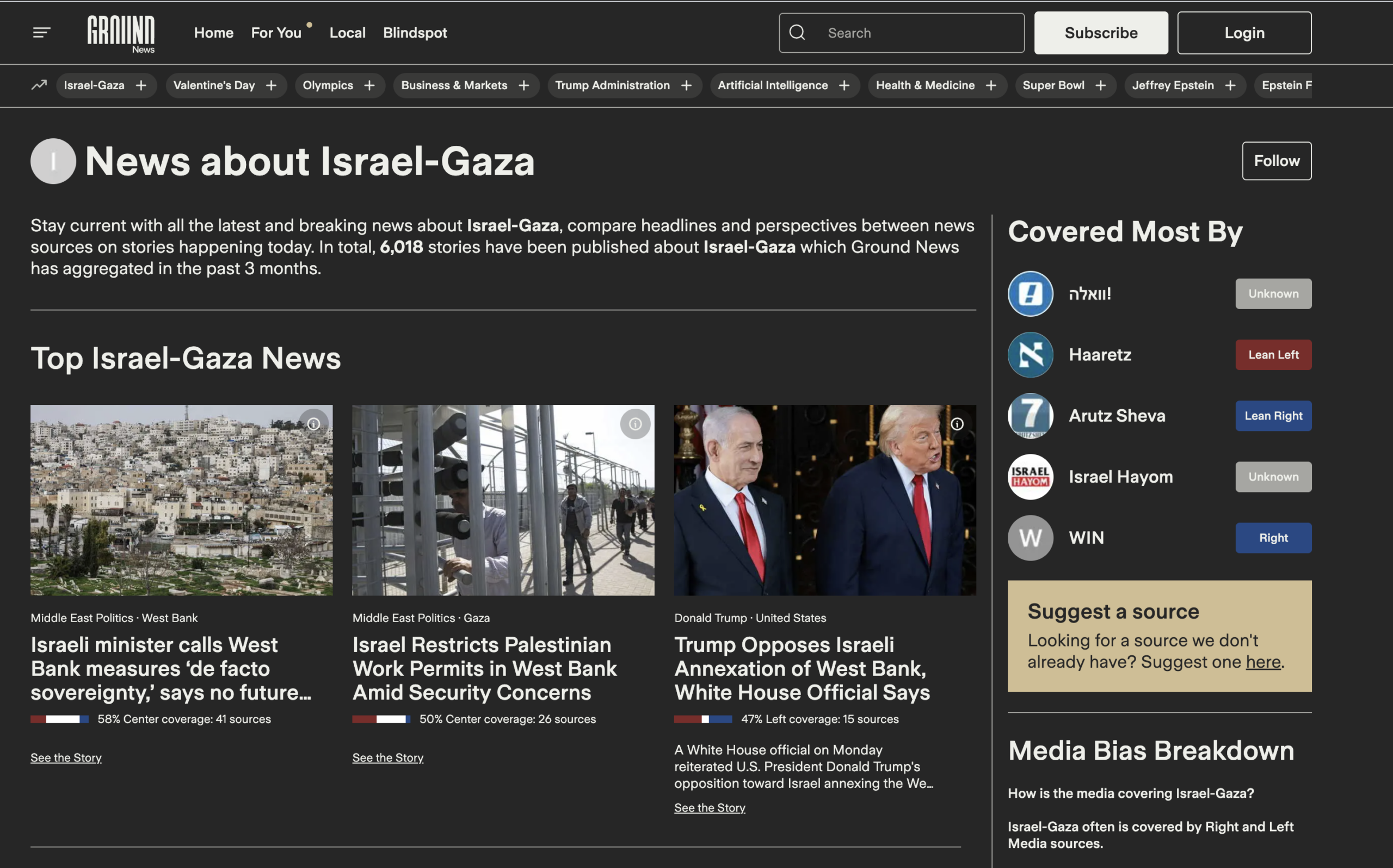
I’ve also experienced situations where I believed a headline too quickly or shared information before fully verifying it. This reading gave me a more structured framework, through ideas like source investigation and cross-checking that I plan to apply more intentionally going forward. Tools like Ground News are especially useful because they expose how the same story is framed across different perspectives, helping me avoid being trapped in a single narrative.
Question 4: How do media literacy skills change your responsibility as a future manager or leader? Provide an example of how weak source evaluation could lead to poor business or sustainability decisions.
As a tech founder and future executive, media literacy significantly raises my responsibility when interpreting information that influences strategy and decision making. Poor source evaluation won’t just affect personal beliefs but it can shape the organizational direction, reputation, and long-term viability.
A good example of this for me is the history of crypto-related scams such as BitConnect and FTX. The project promised guaranteed high returns through a so-called trading bot and was heavily promoted through blogs, influencers, and social media hype. Many executives and investors failed to evaluate the credibility of these sources or question the underlying business model. When the scheme collapsed, it wiped out millions of dollars and destroyed trust.
This illustrates how weak media literacy can expose organizations to reputational damage and long-term strategic failure. Leaders who cannot distinguish credible reporting from promotional hype would risk steering their organizations based on misinformation rather than evidence.
Question 5: Which example of ecological overshoot do you find most concerning, and why? Does the capital-versus-interest analogy change the way you think about sustainability and economic success?
The example of ecological overshoot that got my concern the most is soil degradation because it directly threatens food security. If soil systems collapse, agricultural productivity declines, supply chains are disrupted, and the effects ripple through every aspect of society.
The capital-versus-interest analogy was genuinely perspective shifting for me. It reframed sustainability not as an abstract moral issue, but as a financial one that as a collective the world right now is currently maintaining economic growth by depleting the underlying assets that make future prosperity possible. A strong GDP today would mean very little if it is achieved by exhausting the natural capital required to sustain human life tomorrow.

Question 6: Why do you think societies and businesses continue to draw down natural capital despite clear evidence of overshoot? What incentives or assumptions make this pattern difficult to change?
I think one major reason societies and businesses continue drawing down natural capital is due to short-term profit incentives. Quarterly earnings, shareholder expectations, and competitive pressures reward immediate gains while pushing long-term consequences into the background.
Also environmental costs are frequently externalized, the damage doesn’t show up directly on balance sheets and as a result, ecological degradation feels abstract or disconnected from everyday decision-making.
Until our incentives shift to account for long-term risk and system-wide consequences, drawing down natural capital will continue to feel rational even when it is clearly unsustainable.